Home 60 principles for life and leadership
60 principles for life and leadership
From our parents, our mentors, our friends, our reading and our own experience.
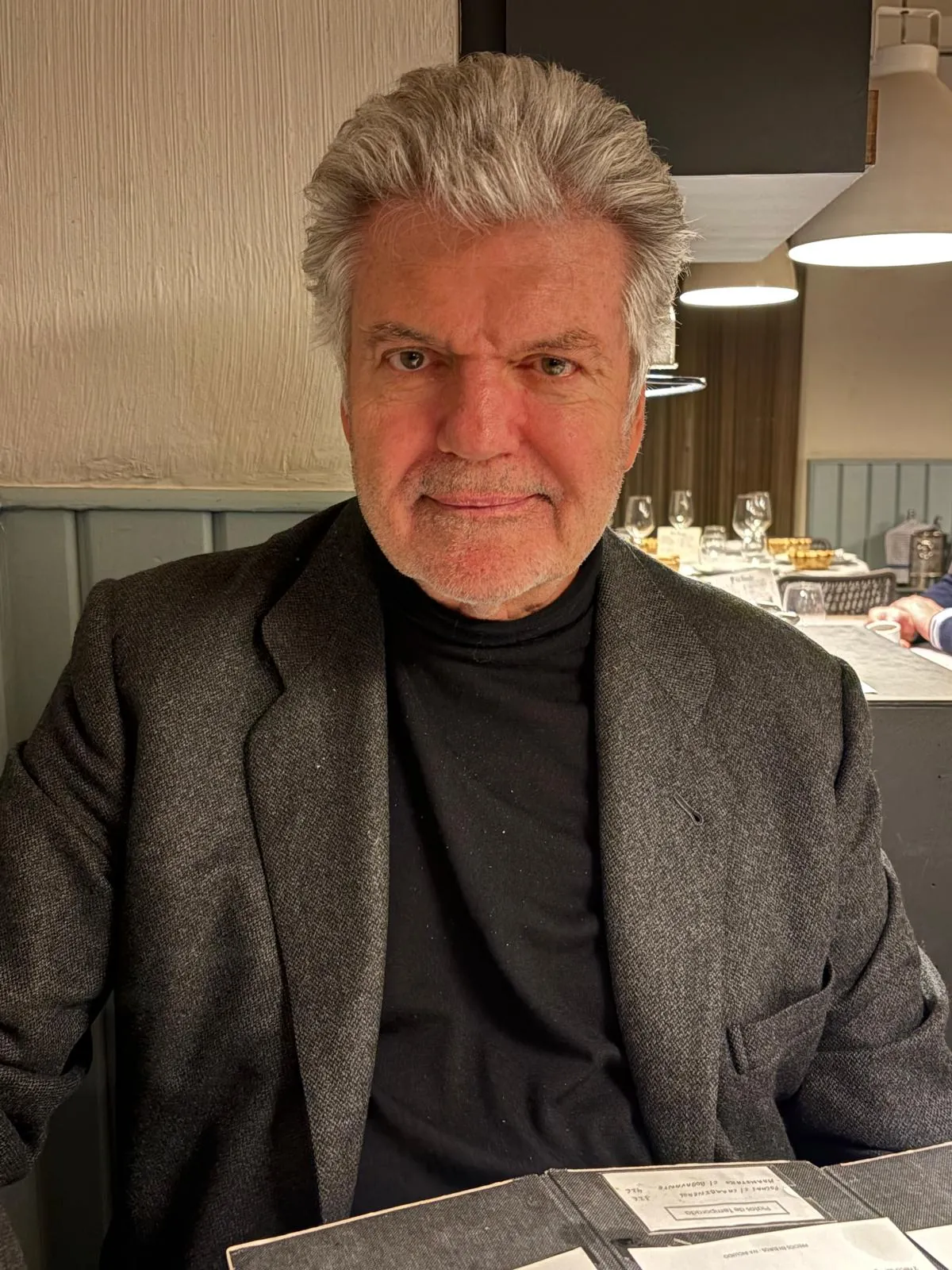
Portrait.
Theory is easy. Execution is everything.
Juan Villalonga Navarro
Purpose, mindset and a way of living
- 01
Have a clear vision of where you want to go.
Dream big, think boldly and pursue your goals with energy, joy and passion.
- 02
Plan your life, but accept that you cannot control everything.
Have a direction, make well-thought-out plans and take responsibility for your decisions. But leave room for uncertainty, change and the unexpected. Life rarely unfolds exactly as we planned it.
- 03
Always try to stay at the wheel of your own life.
Take responsibility for your decisions, your time and the direction of your life. You may not control everything that happens, but you can control how you respond.
- 04
Don't wait for the perfect moment to live.
Don't wait to change, to start something, to travel or to do what you truly want to do. Life is happening now.
- 05
Live in the present. Live now.
Enjoy the moment and give your full attention to the life you are living. The present is the only part of life you can truly experience.
- 06
Travel less, venture more.
Step out of your comfort zone and seek unique experiences, adventures and new perspectives. Explore the world, by all means, but remember that the most important journey is understanding yourself.
- 07
Leaving your comfort zone is essential to growth.
Innovation and progress are usually born of risk, challenge and uncertainty. Staying too long in a comfortable situation can lead to stagnation and missed opportunities.
- 08
Never stop reinventing yourself.
Never truly retire from life. Keep learning, evolving and finding new ways to contribute.
- 09
Keep an optimistic and positive attitude to life.
Optimism does not mean ignoring difficulties; it means believing there is always a way forward.
- 10
Practise gratitude.
Be grateful not only for the obvious things — the people you love, your health, opportunities and small pleasures — but also for the experiences that have tested you. Gratitude changes how you see what you have and reminds you that many of the things we take for granted are already a gift.
- 11
Know yourself and accept who you are.
Self-acceptance and the love you give yourself are fundamental to balance and well-being.
- 12
Don't let your mind make you suffer over things that have not yet happened.
Much of our anxiety comes from living in futures that exist only in our imagination. Prepare for what you can control, but don't suffer needlessly over what has not happened yet.
Character, relationships and inner life
- 13
Choose carefully whom you let into your life.
Protect your time and your peace. Surround yourself with people who respect you, want the best for you and bring positive energy into your life.
- 14
Set clear boundaries.
Knowing what you are and are not willing to accept is essential to protecting your well-being, your identity and your relationships.
- 15
Love people deeply, but don't mistake physical closeness for emotional intimacy.
Being close to someone does not necessarily mean truly knowing them or being known by them. Real intimacy requires trust, vulnerability, understanding and a genuine emotional connection.
- 16
Build strong relationships, but don't lose your own identity within them.
Healthy relationships allow two people to grow together without either disappearing into the other. Love should deepen who you are, not erase it.
- 17
Don't judge people.
We rarely know the whole story behind someone's actions, decisions or circumstances. Seek to understand before you judge.
- 18
Practise forgiveness, but don't forget.
Forgiving does not mean justifying what happened, forgetting the lesson or letting someone hurt you again. Forgive so that anger and resentment stop controlling your life, but remember what you learned and protect yourself accordingly.
- 19
Remember the power of discretion.
Not everything you think, feel or do needs to be shared. You own your silence and you are responsible for your words.
- 20
Silence can be the most powerful cry.
Sometimes what is left unsaid communicates more than words ever could.
- 21
Listen twice as much as you speak.
Listening carefully is one of the simplest ways to understand people, to learn and to build trust.
- 22
Empathy always has value.
Try to put yourself in the other person's place before judging or responding. Understanding does not require agreeing.
- 23
Love is shown through actions, not words.
If you love someone, you take on responsibilities, you care and you protect. When words and actions do not match, actions usually reveal the deeper truth.
- 24
Never give up on romantic love.
A meaningful partnership can be one of life's greatest sources of connection, growth, companionship and joy.
- 25
Don't expect your partner to make you happy.
No one can be responsible for meeting that need. Learn to be happy with yourself and then share that happiness with someone who is also working on their own fulfilment.
- 26
Let love make you a better and wiser person, instead of making another person the purpose of your whole life.
If you love someone, don't only ask, “How can this person make me happy?” Ask instead, “How does loving this person help us both become better human beings?”
The highest form of love is not simply possessing something beautiful. It is allowing our desire for beauty and goodness to lead us towards wisdom, growth and a deeper understanding of life.
Perhaps that is what makes love truly meaningful: not that we lose ourselves in another person, but that through love we become more fully ourselves.
- 27
Sharing your happiness with someone who is also happy is wonderful.
A healthy relationship is not about completing each other; it is about enriching each other's lives. The goal is not to become one person, but two whole people who choose to walk together.
Learning, humility and personal growth
- 28
There is strength in saying “I don't know”.
Admitting what you don't know is usually the first step towards learning.
- 29
Asking questions is not a sign of weakness.
Curiosity is a strength. The best questions usually open the door to the best answers.
- 30
Always keep a learning mindset.
Stay curious. There is always something new to understand, discover or improve.
- 31
We learn by reading, by talking to the right people and by observing ourselves.
Learning comes from knowledge, experience, conversation, reflection and self-knowledge.
- 32
If you are the smartest person in the room, you are probably in the wrong room.
Surround yourself with people who know things you don't. Growth often begins when you are comfortable being the least knowledgeable person in the room.
- 33
You don't need to know everything; you need to know how to lead people who know more than you.
Leadership is not about having all the answers. It is about bringing talent together, asking the right questions and enabling people to do their best work.
- 34
Keep your ego in check.
Ego can stop us from listening, learning, admitting our mistakes and valuing other people's talent.
- 35
Humility means knowing you can always learn from others.
Humility does not mean thinking less of yourself; it means understanding that you are never above learning, listening or admitting that someone else may know more than you. Stay confident in your abilities without becoming blind to your limitations.
- 36
Don't talk about people; talk about facts and ideas.
Focus conversations on what matters rather than on gossip, personalities or needless judgement.
- 37
Go into meetings without preconceived ideas.
Avoid emotional arguments. Focus on facts, data and ideas, and stay open to changing your mind.
Leadership, people and execution
- 38
Character is what makes people follow a leader.
Knowledge matters, but humility, integrity and a genuine attitude of service matter even more. The way you treat people, especially those with less power, is a true test of character.
- 39
Choose people for their character, not only their abilities.
Look for kindness, joy, integrity, willingness to learn, how they treat people with less power, and a team-centred attitude rather than an ego-driven one.
- 40
Surround yourself with exceptional talent.
Look for people who value hard work, recognise the importance of effort and keep a positive attitude.
- 41
The key to a successful team is a shared vision.
Communicate clear goals, focus on a small number of meaningful metrics and execute with short-term determination.
- 42
Theory is easy. Execution is everything.
The world is full of great ideas and good intentions that never become reality. What matters is turning ideas into action.
- 43
Success comes from continually questioning the status quo.
Question the way things are done. Ask whether there is a better, simpler or more effective way.
- 44
Focus on where you compete, not only on how you compete.
Choosing the right arena and the right opportunity can matter as much as how well you perform within them. Had Roger Federer's parents persuaded him to play badminton instead of tennis, his career and his earnings would have been very different.
- 45
Put the customer at the centre of the organisation.
The customer is king. Obsess over the product and, above all, over the problem you are trying to solve.
- 46
If an exceptional asset is worth a given price, it is also worth 20–30% more.
The key is having the vision of how you will create value in the asset.
Discipline, effort and compounding
- 47
Effort, perseverance and a good dose of luck matter.
Hard work and perseverance usually matter more than raw intelligence. Success is rarely the result of a single factor.
- 48
Your habits shape your life.
Good habits make you stronger, wiser, healthier and more capable over time. Bad habits work in the opposite direction and can gradually destroy things that took you years to build. Your life is, to a large extent, the sum of what you do repeatedly.
- 49
Small improvements compound over time.
Simple ideas, applied consistently, can produce extraordinary results over many years. Improve something small every day.
- 50
The best exercise is the exercise you actually do.
Consistency matters more than having the perfect routine.
- 51
The pillars of longevity are nutrition, exercise, sleep and the quality of your relationships.
Looking after your body and nurturing meaningful relationships are long-term investments.
- 52
One of the greatest forms of well-being is control over your time.
Time is the truly non-renewable resource. Use it intentionally.
- 53
Remember: you may not be short of time; you may be giving too much of it away.
Protect your time from what does not really matter.
Calm, perspective and inner balance
- 54
When something makes you angry, don't react immediately.
Pause. Breathe. Wait. Emotions settle with time, and from a place of calm we usually see things more clearly. Decisions made calmly are usually better than those made on impulse.
- 55
The human soul needs a slower pace to be truly nourished.
Constant motion is not the same as truly living. Only when we slow down can we fully observe, appreciate and understand what surrounds us.
- 56
We are spirit living in a body.
We must work constantly to align our body, mind, spirit and emotions.
- 57
Money does not necessarily bring happiness, but it can bring peace of mind.
Financial security can provide freedom, stability and the ability to make decisions with less anxiety. Money is a tool; how we use it determines much of its value.
- 58
People tend to leave life more at peace when they have lived with purpose and served others.
A meaningful life is not only about what we achieve for ourselves, but also about what we give to others.
- 59
In the end, a good life is one in which you become more fully yourself.
Plan boldly, love deeply, keep learning, serve others, protect your time and stay open to change. We cannot control the whole journey, but we can choose how we travel it and who we become along the way.
- 60
Live with gratitude for the journey, not only the destination.
Life is not simply a series of goals to reach. Appreciate the people, the experiences, the lessons, the stumbles and the everyday moments along the way. One day you may realise that many of the moments you were rushing through were precisely the life you were hoping to reach.